If your passport photo bounced back, you're not alone — the same handful of mistakes account for most rejections worldwide. The good news: each one is fixable, and the official rules are surprisingly specific. Below is a country-by-country breakdown of why photos fail and exactly what the issuing authorities require. You can check any photo for free against these rules with Snapassport.

Was the background not plain and uniform?
This is the single most common rejection reason. The U.S. requires a plain white or off-white background with no shadows, textures, or other people in the frame (U.S. Department of State — Passport Photos). The UK is stricter on color: GOV.UK requires a plain light-grey or cream background and no shadow behind your head (GOV.UK — Get a passport photo). Canada (IRCC) requires a plain white background with uniform lighting (IRCC — Passport photo requirements). A wall behind you that looks white to the eye often photographs with a gradient or shadow — that's enough to fail. See the full US passport photo guide, UK passport photo guide, or Canada passport photo guide for the exact backdrop each accepts.
Is your head the wrong size in the frame?
Every authority specifies a head-height range, and "too close" or "too far" is a frequent fail. The U.S. requires the photo to be 2x2 inches with the head between 1 inch and 1 3/8 inches (25–35 mm) from chin to crown. The UK digital photo must show the head (crown to chin) measuring between 29 mm and 34 mm in a 35×45 mm frame. Canada requires the face to measure 31–36 mm from chin to crown. If you cropped a selfie, the head height is almost always wrong — measure it before you submit.
Are you wearing glasses?
Since 2016 the U.S. State Department has banned eyeglasses in passport photos except in rare documented medical cases. The UK and Canada still allow glasses but reject any photo with glare on the lenses, frames covering the eyes, or tinted lenses. Glare is the silent killer here — a single reflection across an eye is an automatic reject.
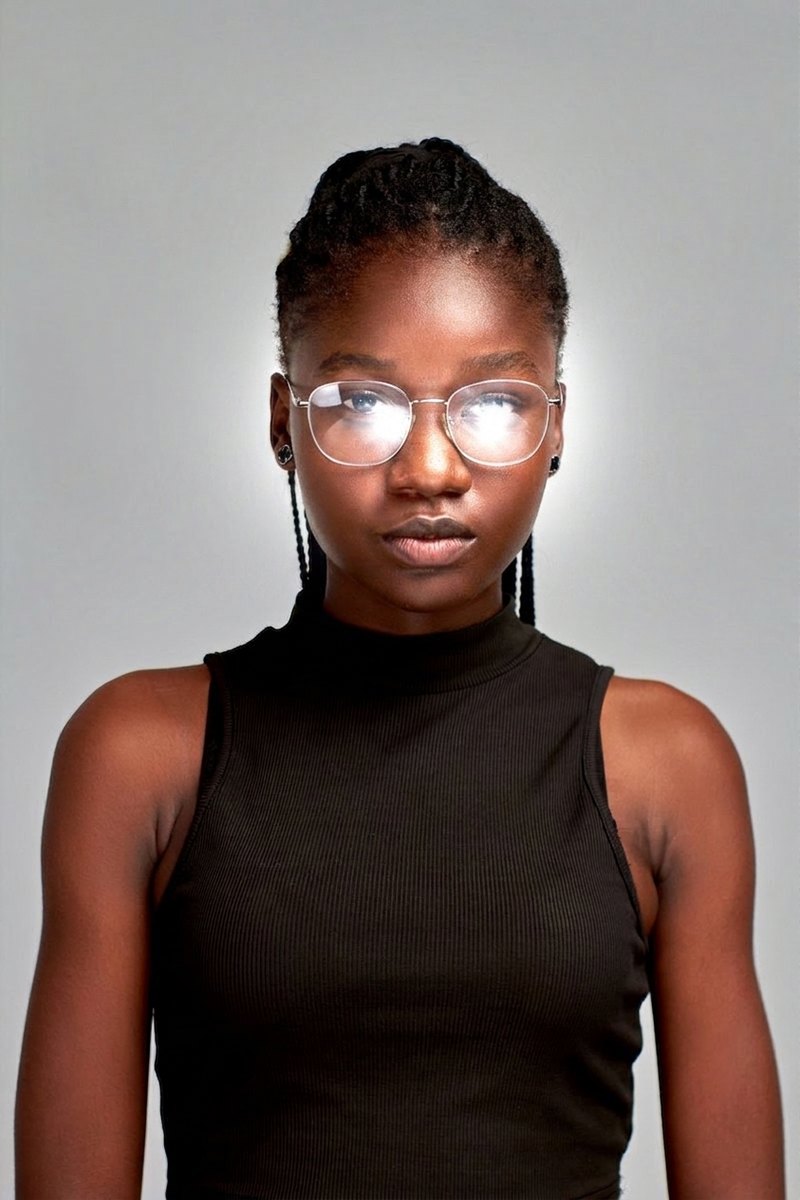
Was your expression non-neutral?
All three authorities require a neutral expression with the mouth closed (a natural smile is tolerated in the UK and Canada, but an open mouth or grin is not). Both eyes must be open and clearly visible, looking straight at the camera. Hair across the eyes, a wide smile, or squinting will all trigger a rejection.
Was the lighting too dim, too harsh, or color-cast?
Uneven lighting causes shadows on the face or background; poor white balance produces an unnatural color cast that distorts skin tone. The U.S. and Canada both require even, natural lighting with no red-eye and no shadows. Photos taken under warm indoor bulbs or in dim rooms commonly fail on exposure or color.
How to fix a rejected photo in one step
You don't have to re-shoot. Upload your existing photo to Snapassport and it's validated against the official spec for your country — background uniformity, head size, glare, expression, and lighting are all checked automatically, and the AI fix can replace a busy background, correct exposure, and neutralize a color cast while preserving your actual face. It's the fastest way to turn a rejected photo into a compliant one without another trip to the booth.