Glasses are one of the most common reasons a passport or visa photo gets rejected — and the rules are different in every country. The short version: the United States bans eyeglasses entirely, while the UK and Schengen countries allow them but reject any photo with lens glare, tinted lenses, or frames that cover the eyes. Below is the exact, source-backed guidance for each, plus how Snapassport catches these problems before you pay a government fee.

Can you wear glasses in a US passport photo?
No. As of November 1, 2016, the US Department of State no longer allows eyeglasses in passport photos. You must remove all glasses — including prescription lenses — before taking the photo. The only exception is a documented medical reason (for example, recent eye surgery), and that requires a signed statement from your doctor submitted with your application. This is why our US passport photo guide flags any detected eyewear as a hard failure rather than a warning.
The rule is stated plainly on the official U.S. Department of State — Passport Photos page: "glasses are no longer allowed in passport photos." Sunglasses and tinted lenses were never permitted. The same eyewear ban applies to the US visa (DS-160) photo as well — see the U.S. Department of State — Photo Requirements.
Can you wear glasses in a UK passport photo?
Yes, but only if your eyes are fully visible with no reflection, glare, or frames covering them — and the UK strongly advises taking the photo without glasses if you can. Tinted or photochromic lenses are not accepted, frames must not cover any part of the eyes, and there must be no light reflecting off the lenses.
Per GOV.UK — Get a passport photo, the photo must show your eyes open and clearly visible. The most common failure here is glare bouncing off the lenses under bright lighting. Our UK passport photo guide checks the lens region for reflections and confirms both eyes are unobstructed. Note that the UK background standard is plain light grey or cream — not pure white.
Can you wear glasses in a Schengen visa photo?
Yes, if the glasses are not tinted, the frames do not cover your eyes, and there is no glare on the lenses. Schengen photo standards follow ICAO Doc 9303, which permits clear prescription glasses but rejects any photo where the eyes are obscured.
The ICAO — Photograph Guidelines (Doc 9303, Annex A) require the eyes to be open and clearly visible, with no flash reflection. The European Commission — Visa policy defers to these ICAO biometric standards across all member states. Our Schengen visa photo guide applies the same light-background and glare checks.
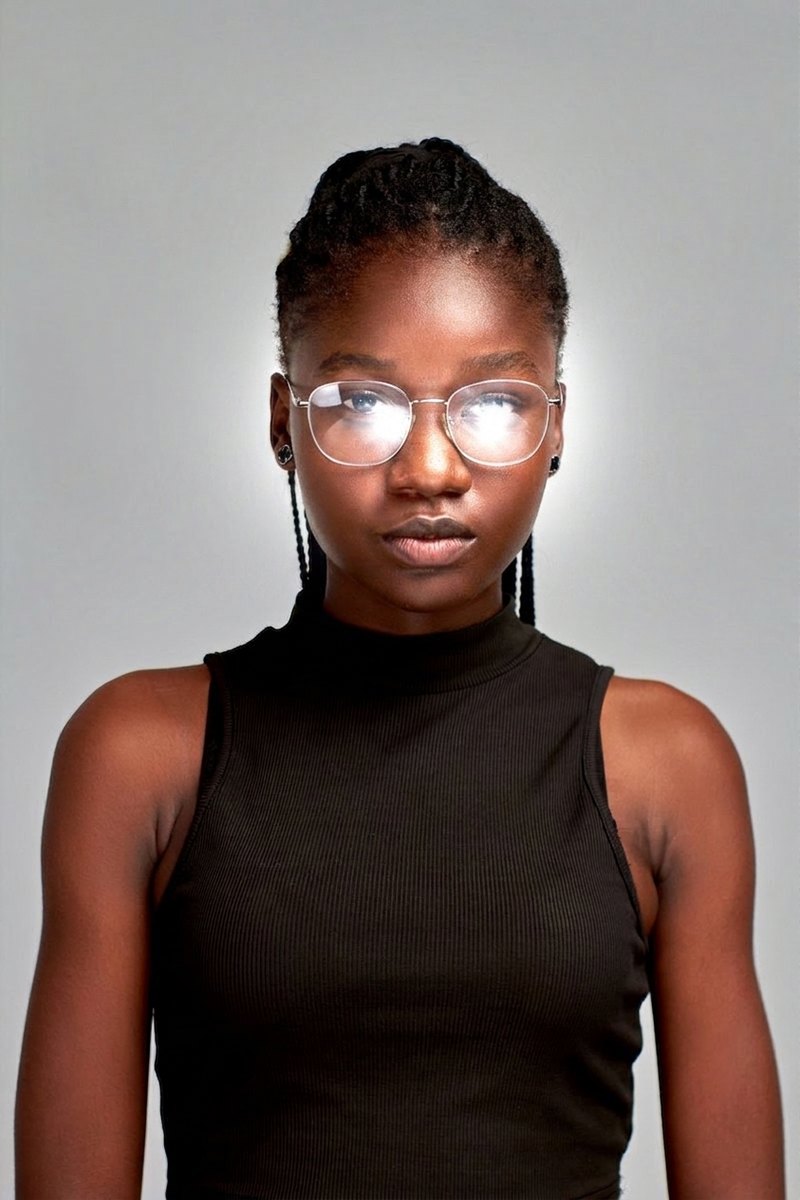
What gets a photo with glasses rejected?
Across every country that allows glasses, the rejection reasons are the same: lens glare or reflection, tinted or transition lenses that have darkened, thick frames covering the eyes, and shadows cast by the frames. Even where glasses are technically permitted, glare is the single most frequent cause of rejection — which is why officials universally recommend removing glasses when you have the choice.
How Snapassport prevents a rejection
Upload your photo and Snapassport runs country-specific checks in seconds: for the US it fails any detected eyewear; for the UK and Schengen it inspects for glare, tint, and eye visibility. If glasses are the only problem on a US-bound photo, the AI fix can cleanly remove them so your eyes stay accurate and visible — no second trip to a photo booth, no wasted government fee.